


Kopi socks to specialty: The evolution of Singapore’s coffee culture
- Kingsley 角落君
- Jul 21, 2022
- 3 min read

Updated: Jul 22, 2022
By Zheng Xinlan, NowThat
Updated: 22 June 2022 08:19AM (SGT)
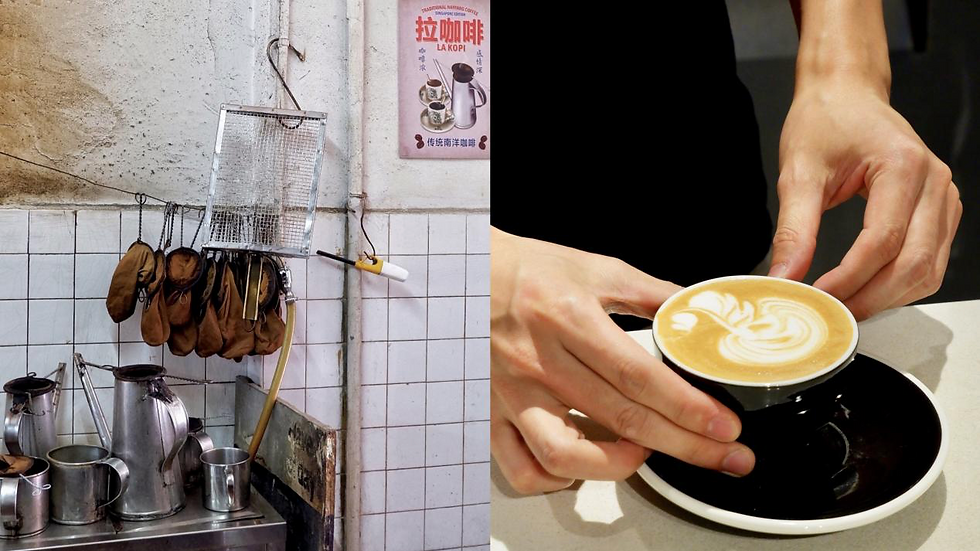
Singapore's traditional Kopi and specialty coffee loved by young people (PHOTO: ZHENG XINLAN)
When he was 6 years old, Jay Ong Jun Hao tried kopi for the first time under the guidance of his grandmother. The bitter and burnt taste made him think it was an "adult's drink". He didn't know how to appreciate it.
More than a decade later, he tried his first cup of specialty coffee out of curiosity.“I was truly amazed by how a cup of coffee can have so many tasting notes at different temperatures as it cools down,”Mr. Ong said.
He loved it so much that after graduating he got a job in a specialty cafe near the CBD and learned how to make coffee and how to appreciate it.
Two years later, he has enough savings to open his own boutique coffee shop Slickshot downstairs in a Whampoa HDB block.

Jay Ong Jun Hao,Owner of Slickshots (PHOTO: ZHENG XINLAN)
Singapore’s traditional coffee culture was introduced to Singapore by immigrants from Fujian and Hainan in China in the 19th century and has retained its roots without much changes.
Robusta beans are used in this coffee, which is roasted in a large pot over a charcoal fire, caramelizing the beans with melted sugar and adding butter to enhance the flavor.
Using a piece of cloth cut into the shape of a sock, it acts as a filter for the coffee. Hot water is then added into the kettle with a long spout.
It has a very intense, bitter, heavy-bodied profiles. On this basis, 132 different configurations have been developed in combination with evaporated milk and condensed milk. Each configuration has its own terminology to help you order efficiently.
Ordering a cup of kopi in an open-air coffee shop and flipping through newspapers has become a collective memory of the older generation in Singapore, and this is also the coffee culture well-known to the locals.
In 2022, Singapore consumes about 15,000 metric tons of coffee according to the Singapore Coffee Association. Consumption of specialty coffee has also grown over the past three years.
With the rise of the third wave coffee market, more and more young coffee lovers are influenced by coffee trends around the world and bring specialty coffee to Singapore, where it takes root.
“Specialty coffee uses Arabica beans which has less caffeine pursues the uniqueness of flavor,usually comes with chocolatey, nutty, floral, fruity or even winey tasting notes depending on which country or farm produces the coffee.” Mr. Ong said.
Most specialty coffees are independent brands that focus more on the quality of the coffee beans used and the brewing techniques to deliver a better taste to customers
Usually the price of coffee will be higher, the environment of the store and the experience of drinking coffee will be better, and spending more in boutique coffee shops is a way of life.
Mr. Ong said : "I see a lot of people getting into specialty coffee, learning how to identify the different tasting notes in the coffee. It's a very amazing feeling watching people experience specialty coffee for the first time."
With the rise of coffee culture in Singapore and the environmental impact of the epidemic, the trend of using capsule coffee machines at home to make coffee is becoming more and more popular.
Peilin Lee, head of marketing at Nespresso Singapore said:”home coffee consumption had "reached new heights" over the past year.”
“More people are brewing their own coffee at home, experimenting with different coffee beans and different brewing recipes. They found that it was amazing how many different layers of flavor could be produced in a single cup of coffee”Mr. Ong said.
Singapore's coffee drinkers are maturing, as we see the evolution of coffee culture, Singaporeans are embracing all styles of brewing and drinking.
With the changes we have seen, I hope that we are able to witness coffee culture have more interesting developments in the future in Singapore.
Comments